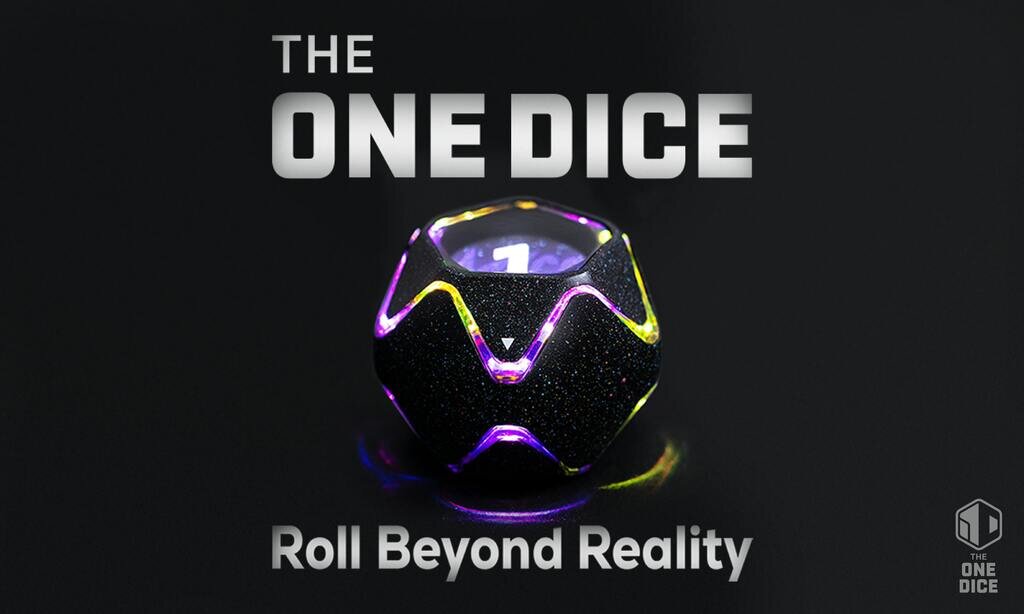
🎲 Inside The One Dice: New Classes, New Lighting & Building the System Behind Every Roll
25 days ago
– Mon, Aug 24, 2026 at 12:42:53 AM
Hi everyone,
Before we get into this month's development update, we wanted to start with something a little more fun. We have a big development update for you this month.
🎵 A New Class Takes the Stage - Meet the Bard
Before we get into this month's development update, we wanted to start with something a little more fun.
The Bard has arrived. We've been working hard on another round of class animations, and these are four of the latest Bard animations we've been developing for The One Dice.


These aren't simply animations we're dropping onto the screen either. Each class is being built as its own little visual system, with multiple character animations, number sequences, lighting behaviour and different reactions depending on what's actually happening during the roll. And there's still plenty more being worked on.
We're currently developing the Artificer class, along with additional critical-hit and miss animations, number animations, and the other states needed to bring all of these classes together into the complete system.
This is actually a good example of what we'll explain in more detail later in this update.
What looks like a few seconds of animation on the dice can ultimately involve a huge number of individual frames and files behind the scenes. Multiply that across every number, class, crit, miss, roll type and multi-roll combination, and you start to get an idea of the scale of the system we're now putting together.
What looks like a few seconds of animation on the dice can ultimately involve a huge number of individual frames and files behind the scenes. Multiply that across every number, class, crit, miss, roll type and multi-roll combination, and you start to get an idea of the scale of the system we're now putting together.
But enough of the technical stuff for a moment... We hope you like the Bard. There's a lot more coming.
💡 Lighting - Where Things Start Getting Really Fun

Another area we've been testing a lot recently is the lighting system. What you're seeing here are some of our lighting tests and mock-ups. We're experimenting with a lot of different behaviours: pulses, swirls, directional effects, flashes, fills, flickers and different ways the light can move around the dice.


And this is only part of what we're working on. The bigger goal is to make lighting something you can actually play around with and personalise through the app. We're currently working through how different lighting profiles are selected, stored, and sent to the dice, and how the firmware interprets those profiles and controls the LEDs on the hardware.
There's quite a lot happening behind what looks like a simple lighting effect. Colour, direction, speed, brightness, timing, animation behaviour and what actually triggered the effect all need to work together. A normal roll might behave one way, while a critical hit, miss, character animation or another event can trigger something completely different.

We're testing lots of different options at the moment and figuring out which combinations look and feel best on the physical dice. Some of what you're seeing here will change as we continue tuning things; these are development tests rather than finished effects, but it gives you a good idea of just how much we're experimenting with.
The One Dice: Building the System Behind the Roll
We're now at the stage where those individual parts have to become one complete product.
And that's a much bigger job than simply assembling the hardware and starting production. The work underway right now focuses heavily on the systems and architecture behind The One Dice. Firmware, memory, animations, lighting, Bluetooth, multi-roll, the app, data management and the physical electronics all have to communicate with one another reliably. This is really where everything we've spent the last few years building comes together. And with that, we also want to talk openly about timing.
⚙️ Building Systems, Not Just Features
One thing we've discussed in previous updates is that we're no longer developing isolated features.
We're developing systems.
Take multi-roll. On paper it sounds relatively straightforward. Roll several One Dice together and have them recognise and display multiple results. Behind that simple experience is a much larger system.
Each dice needs to understand what has happened, process the result, determine what needs to be displayed, access the correct files, trigger the correct animation and lighting behaviour and communicate with the wider system. Then introduce multiple dice doing that together.
Then introduce different themes.
- Different dice types.
- Fast roll.
- Critical hits.
- Misses.
- Different number formats.
- Lighting profiles.
- App communication.
Suddenly something that sounds like one feature touches a huge part of the architecture.
And that's just multi-roll. The same thing happens throughout the product. Every system we add has relationships with other systems, which means we're not simply asking "does this feature work?"
We're asking, "does this feature still work correctly when everything else is happening around it?" That's where a huge amount of our development and testing time is currently going.

🧪 Internal Testing — App, Dice & System Integration
Another big area of work right now is internal testing.
The app videos above are still very much development builds, but they give you a good look at the kind of testing we're doing behind the scenes. We're going through the different app flows, making sure selections behave properly, checking how information is passed to the dice and making sure the app and firmware are responding to each other in the way we expect. This isn't just about whether a button works on the screen.
We're testing how the whole system behaves together. That includes Bluetooth connectivity, theme selection, lighting profiles, different dice modes, animation triggers, data transfer and the way the dice responds when settings are changed in the app.
As we add more systems, the testing naturally becomes more involved because one change can affect something somewhere else. A lighting profile might work perfectly on its own, for example, but we then need to check how it behaves alongside a character animation, during fast roll, during multi-roll, after reconnecting over Bluetooth, or when another setting has been changed in the app.
That's really what this stage is about now. Not just proving that individual features work, but making sure they all work together reliably as one complete product.
We're running through these scenarios internally over and over, finding the little things that need adjusting, fixing them and then testing again. It's not always the glamorous side of development, but it's one of the most important parts of getting The One Dice ready for production.
The app will continue to evolve as the firmware is refined, so what you're seeing here isn't the finished interface yet. But it's a good snapshot of how much of the underlying system is already being connected and tested together.


🧠 Firmware: Where Everything Meets
Firmware is probably one of the most important areas of development happening right now because it's effectively where the physical dice and everything we've created for it meet.
We're dealing with thousands of files stored locally on the device. That includes single-digit and multi-digit number assets, animations, character content, critical hits, misses, fast-roll content, lighting information, interface graphics, system states and many other supporting files.
All of that information has to be organised in a way that the dice can access quickly and reliably.
So we're doing a lot of work around file structure, data compression, memory optimisation and removing unnecessary duplication.

For example, if several themes can safely reference the same underlying animation or system asset, it doesn't make sense to store that same information repeatedly. But where content can be removed or changed by the user, we also have to make sure one theme doesn't depend on something that may no longer be there.
These sound like small decisions, but multiplied across thousands of files they become incredibly important.
The architecture we're putting in place now will also determine how easily we can add themes, animations, lighting profiles and other content in the future.
That's why we're taking this part seriously. We don't just want something that works on day one. We want an architecture we can continue building on.
📅 Production & Delivery - Where We Are Now
And on the manufacturing side, things are starting to get very real now.
We'll be visiting the factory shortly ahead of manufacturing beginning, going through everything with the production team and making sure the processes, equipment and production setup are all where they need to be before we start.

This is an important stage for us. After all the months of precision tooling, prototyping, testing and engineering, we're now getting everything lined up for the move into manufacturing.
This is an important stage for us. After all the months of precision tooling, prototyping, testing and engineering, we're now getting everything lined up for the move into manufacturing.
We'll be reviewing the production setup, assembly process, testing procedures and QC, as well as making sure the different parts of the manufacturing process are ready to work together once production gets underway.
Our current plan remains to begin manufacturing around the end of September.
From there, production itself will take a number of months. This isn't a product where we press a button and thousands of finished units appear a few weeks later. There are multiple stages of production, electronics integration, programming, assembly, testing and quality control before finished units can move into fulfilment.
From there, production itself will take a number of months. This isn't a product where we press a button and thousands of finished units appear a few weeks later. There are multiple stages of production, electronics integration, programming, assembly, testing and quality control before finished units can move into fulfilment.
When we originally planned the project, October was our target for getting The One Dice into your hands.
We're now in August, and based on where development and validation currently stands, October is no longer a realistic shipping date. We'd rather tell you that clearly now than spend the next couple of months trying to force development around a date that no longer reflects the reality of the project. It's the sheer amount of engineering, integration and testing involved in taking The One Dice from individual working elements into a finished consumer product.
The hardware has to work with the firmware. The firmware has to work with the animations and data. The dice has to communicate correctly with the app. Multi-roll has to work across multiple dice. Lighting has to react correctly. Bluetooth has to remain reliable. Assets have to load quickly. Memory has to be managed efficiently. And all of those things have to continue working when they're combined, not simply when they're tested individually.
That's the stage we're in now.
⭐ Quality Before an Arbitrary Date
⭐ Quality Before an Arbitrary Date
We understand that dates matter. You've backed us, you've waited patiently. But there's also a point where chasing an old estimate becomes counterproductive. We're not going to rush firmware. We're not going to skip system testing. We're not going to lock architecture we're not comfortable with.
And we're not going to push hardware into mass production simply because an earlier estimate said we should.
Once thousands of units are being manufactured, fixing a fundamental hardware or architecture decision becomes a completely different problem. So we're doing that work now. October was the goal.
We'll continue sharing progress as the remaining systems move through development and validation, and we'll give you a revised shipping window when we have enough certainty behind it for that date to actually mean something. We don't want to replace one estimate with another just to put a date on the page. We know waiting longer isn't what anyone wants to hear. But equally, we don't think anyone wants us to rush through this stage just to meet a date estimated much earlier in development. The goal is still the same. Deliver The One Dice properly.
As we've explained above, October is no longer a realistic shipping date. We know the obvious question after reading that is: when are we now expecting to ship? The important milestone is that we are currently planning for manufacturing to begin around the end of September.
As we've explained above, October is no longer a realistic shipping date. We know the obvious question after reading that is: when are we now expecting to ship? The important milestone is that we are currently planning for manufacturing to begin around the end of September.
That doesn't mean thousands of finished One Dice immediately start coming off the production line on that date. With a product of this complexity, manufacturing happens in stages. Components need to be produced and assembled, electronics integrated, units programmed, tested and checked, and the complete product then has to move through final QC and preparation for fulfilment.
That process will take a number of months, particularly because this is the first full production run and we need to make sure the manufacturing and testing processes themselves are working properly before increasing volume.
So realistically, we are now looking beyond October for delivery, with production continuing through the final months of the year.
👀 One More Thing... Something New Is Coming
Before we go, we've got one more thing we've been really excited to share with you.
Alongside everything happening with The One Dice, we've also been working behind the scenes on something completely new for the tabletop RPG world.
SHATTERED WILDS

We can't reveal everything just yet, but it's a new tabletop gaming project that we've been developing for some time, and it's very different from anything we've created before.
The landing page will also be going live shortly, where you'll be able to get the first proper look at what we've been creating and sign up for early access ahead of launch.


And if you enjoy building worlds, creating encounters and bringing your tabletop games to life... we think you're going to want to see this one. Coming soon.
❤️ Thank You
We know this is a long update, but we wanted you to understand what's actually happening behind the scenes rather than simply saying "development continues."
There's a huge amount happening.Some of it is exciting and visual, like seeing new animations running on the dice. Some of it is incredibly technical, like restructuring thousands of files to save memory.
And some of it is simply hundreds of small engineering decisions that nobody will ever see, but which ultimately determine whether the finished product feels polished and reliable. We're building something we genuinely want you to still be using years from now. That's the standard we're working towards.
Thank you, as always, for your patience, your support and for coming on this journey with us.
The Wild Earth Dice Team


.gif)
.gif)
.gif)
.gif)
.gif)
.gif)
.gif)
.gif)


.gif)


